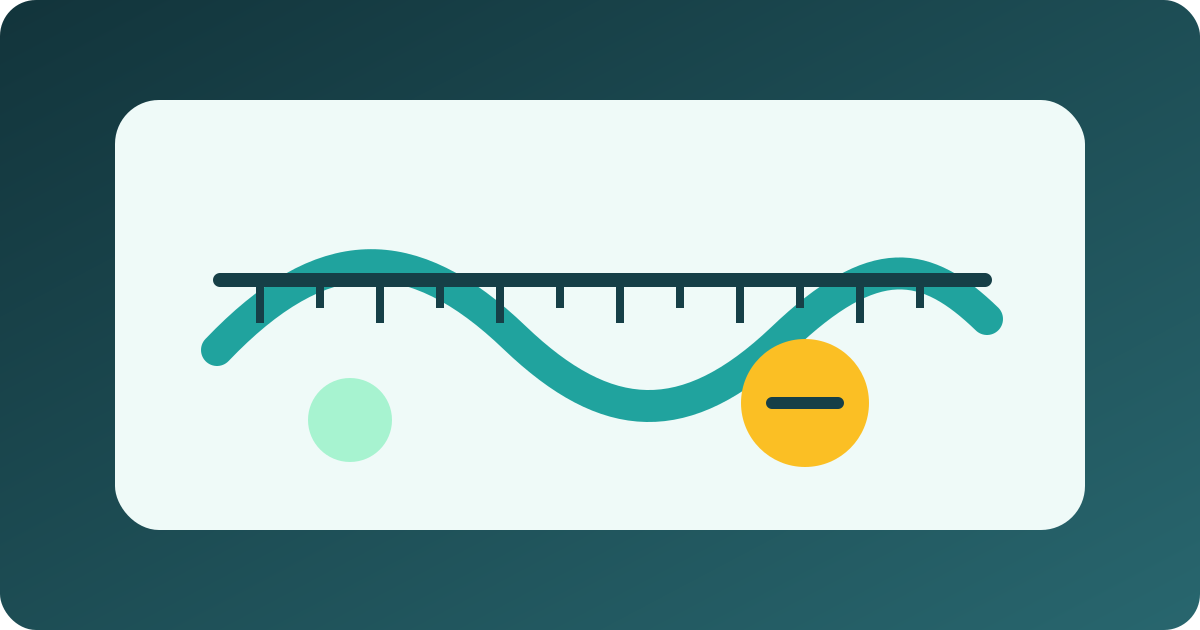
Waist-to-height ratio compares waist circumference with height:
Waist-to-height ratio = waist circumference ÷ height
Both measurements must use the same unit. A waist of 80 centimetres and a height of 170 centimetres gives 80 ÷ 170 = 0.47. Inches produce the same ratio when both values are in inches.
How adult categories are used
Current NICE guidance describes 0.40–0.49 as lower central adiposity, 0.50–0.59 as increased central adiposity, and 0.60 or more as high central adiposity for adults with BMI below 35. It uses the simple public message of keeping waist below half of height.
The guideline links higher central adiposity with increased risk of several health conditions. A category is risk context for a population; it does not diagnose a condition or determine any individual outcome.
Why measurement technique matters
Waist circumference can change depending on landmark, tape angle, clothing, breath, posture, and how tightly the tape is pulled. Measure at the protocol-defined location, with the tape horizontal and snug but not compressing the skin, after a normal exhalation. Repeat if the values differ noticeably.
Height should be measured without shoes when practical. Switching units is safe when the underlying canonical values stay unchanged; repeated conversion and rounding should not alter the stored result.
How Fitness Age Calculator uses it
The ratio appears as optional context in the Quick Assessment. It does not add or subtract years, change confidence, or become a domain score. That separation prevents an anthropometric risk marker from masquerading as cardiorespiratory or strength performance.
The product follows the cited guideline boundary and does not classify the ratio when BMI is 35 or higher. The CDC’s adult BMI page likewise describes BMI as a screening measure rather than a direct body-fat diagnosis. Both measurements have limitations and should be interpreted sensitively.
A neutral way to use the result
Recheck technique before reacting to a borderline value. If you track the ratio, use the same landmark, tape, time, and posture. Avoid frequent measurement; ordinary variation and tape placement can overwhelm short-term change.
Learn how to measure waist circumference, compare BMI and fitness age, or add optional context in the Quick Assessment.